
4.0 KiB
15 - 指针
这是本Golang系列教程的第15篇。我们将学习 Go 语言中指针的作用,并且将 Go 指针与其他语言(如 C/C++)的指针进行区分。
什么是指针?
指针是存储一个变量的内存地址的变量。
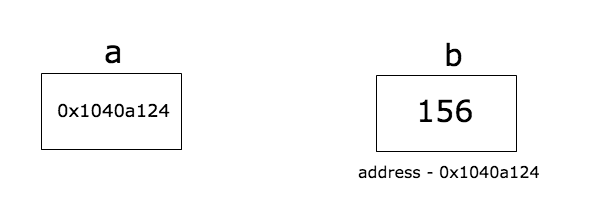
在上图中,变量 b 的值是 156,存储在地址为 0x1040a124 的内存中。变量 a 存储了变量 b 的地址,也可以说 a 指向 b。
指针的声明
指向类型 T 的指针用 *T 表示。
让我们写一些代码。
package main

import (
    "fmt"
)

func main() {
    b := 255
    var a *int = &b
    fmt.Printf("Type of a is %T\n", a)
    fmt.Println("address of b is", a)
}
& 操作符用来获取一个变量的地址。在上面的程序中,第 9 行我们将 b 的地址赋给 a(a 的类型为 *int)。现在我们说 a 指向了 b。当我们打印 a 的值时,b 的地址将会被打印出来。程序的输出为:
Type of a is *int
address of b is 0x1040a124
你可能得到的是一个不同的 b 的地址,因为 b 可能被存储在内存的任意一个地方。
指针的空值
指针的空值为 nil。
package main

import (
    "fmt"
)

func main() {
    a := 25
    var b *int
    if b == nil {
        fmt.Println("b is", b)
        b = &a
        fmt.Println("b after initialization is", b)
    }
}
'b' 首先被初始化为 nil,之后被赋值为 a 的地址,程序输出为:
b is <nil>
b after initialization is 0x1040a124
利用 new 函数创建指针
Go 还提供一个实用的函数 new 来创建指针。new 函数接收一个类型,并返回一个该类型的空值指针。
我们来看一个实例:
package main

import (
    "fmt"
)

func main() {
    size := new(int)
    fmt.Printf("Size value is %d, type is %T, address is %v\n", *size, size, size)
    *size = 85
    fmt.Println("New size value is", *size)
}
上面的程序中,我们在第 8 行利用 new 函数创建了一个指向 int 类型的指针。由于 int 类型的空值为 0,变量 size 是一个指向 0 的整数指针(*int 类型)。
程序输出:
Size value is 0, type is *int, address is 0x414020
New size value is 85
指针的间接引用
间接引用(dereference)指针就是获取指针所指向的变量的值。间接引用 a 的语句是 *a。例如:
package main
import (
    "fmt"
)

func main() {
    b := 255
    a := &b
    fmt.Println("address of b is", a)
    fmt.Println("value of b is", *a)
}
在第 10 行,我们间接引用了 a 并打印了它的值,也就是 b 的值。程序输出为:
address of b is 0x1040a124
value of b is 255
我们再编写一个利用指针改变变量 b 的值的程序:
package main

import (
    "fmt"
)

func main() {
    b := 255
    a := &b
    fmt.Println("address of b is", a)
    fmt.Println("value of b is", *a)
    *a++
    fmt.Println("new value of b is", b)
}
在第 12 行,我们将 a 所指向的值加上了 1,也就是改变了 b 的值(因为 a 指向 b)。因此 b 变成了256,程序输出:
address of b is 0x1040a124
value of b is 255
new value of b is 256
将指针传入函数
package main

import (
    "fmt"
)

func change(val *int) {
    *val = 55
}
func main() {
    a := 58
    fmt.Println("value of a before function call is",a)
    b := &a
    change(b)
    fmt.Println("value of a after function call is", a)
}
在第 14 行,我们将存有 a 的地址的指针 b 传入了 change 函数。change 函数通过间接引用的方法改变了 a 的值,程序输出:
value of a before function call is 58
value of a after function call is 55