
 localizeflow[bot]
978e88a425
localizeflow[bot]
978e88a425
|
7 months ago | |
|---|---|---|
| .. | ||
| solution | 7 months ago | |
| README.md | 7 months ago | |
| assignment.md | 9 months ago | |
| notebook.ipynb | 9 months ago | |
README.md
Introduction to classification
For dis four lessons, you go learn one important part of classic machine learning - classification. We go show you how to use different classification algorithms with one dataset wey dey talk about all di sweet cuisines for Asia and India. Hope say you dey hungry!

Make we celebrate pan-Asian cuisines for dis lessons! Image by Jen Looper
Classification na one type of supervised learning wey get plenty similarity with regression techniques. If machine learning na all about predicting values or names for things by using datasets, then classification dey usually fall into two groups: binary classification and multiclass classification.

🎥 Click di image above for video: MIT's John Guttag dey explain classification
Remember:
- Linear regression help you predict relationship between variables and make correct predictions about where new datapoint go fall for di line. For example, you fit predict wetin pumpkin price go be for September vs. December.
- Logistic regression help you find "binary categories": for dis price level, dis pumpkin na orange or e no be orange?
Classification dey use different algorithms to find other ways to determine di label or class of one data point. Make we use dis cuisine data to see whether, by looking di group of ingredients, we fit know di cuisine origin.
Pre-lecture quiz
Dis lesson dey available for R!
Introduction
Classification na one of di main work wey machine learning researchers and data scientists dey do. From simple classification of binary value ("dis email na spam or e no be spam"), to complex image classification and segmentation using computer vision, e dey always useful to fit sort data into classes and ask questions about am.
To talk di process in one more scientific way, di classification method go create one predictive model wey go help you map di relationship between input variables to output variables.
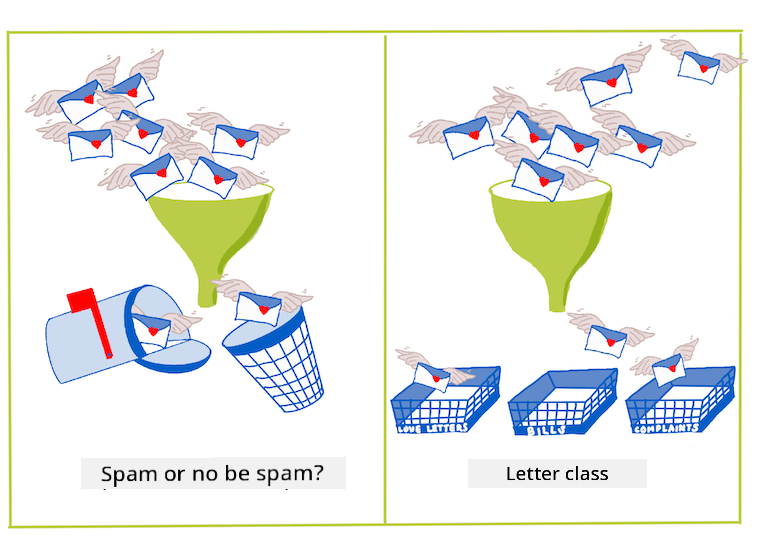
Binary vs. multiclass problems wey classification algorithms dey handle. Infographic by Jen Looper
Before we start di process to clean our data, visualize am, and prepare am for our ML tasks, make we first learn small about di different ways wey machine learning fit classify data.
From statistics, classification using classic machine learning dey use features like smoker, weight, and age to find di chance to get X disease. As one supervised learning technique wey be like di regression exercises wey you don do before, your data dey labeled and di ML algorithms go use di labels to classify and predict classes (or 'features') of one dataset and assign dem to one group or outcome.
✅ Take small time to imagine one dataset about cuisines. Wetin multiclass model fit answer? Wetin binary model fit answer? Wetin if you wan know whether one given cuisine dey likely to use fenugreek? Wetin if you wan see whether, if dem give you one grocery bag wey get star anise, artichokes, cauliflower, and horseradish, you fit make one typical Indian dish?

🎥 Click di image above for video. Di whole idea of di show 'Chopped' na di 'mystery basket' where chefs go make one dish from random ingredients. Machine learning model for don help!
Hello 'classifier'
Di question wey we wan ask for dis cuisine dataset na multiclass question, because we get plenty national cuisines to work with. If we get one batch of ingredients, which of di many classes di data go fit?
Scikit-learn get different algorithms wey you fit use to classify data, depending on di kind problem wey you wan solve. For di next two lessons, you go learn about some of dis algorithms.
Exercise - clean and balance your data
Di first work wey you go do before you start dis project na to clean and balance your data to get better results. Start with di blank notebook.ipynb file wey dey di root of dis folder.
Di first thing wey you go install na imblearn. Dis na Scikit-learn package wey go help you balance di data better (you go learn more about dis work soon).
-
To install
imblearn, runpip install, like dis:pip install imblearn -
Import di packages wey you need to import your data and visualize am, also import
SMOTEfromimblearn.import pandas as pd import matplotlib.pyplot as plt import matplotlib as mpl import numpy as np from imblearn.over_sampling import SMOTENow you don ready to import di data next.
-
Di next work na to import di data:
df = pd.read_csv('../data/cuisines.csv')Using
read_csv()go read di content of di csv file cusines.csv and put am inside di variabledf. -
Check di shape of di data:
df.head()Di first five rows go look like dis:
| | Unnamed: 0 | cuisine | almond | angelica | anise | anise_seed | apple | apple_brandy | apricot | armagnac | ... | whiskey | white_bread | white_wine | whole_grain_wheat_flour | wine | wood | yam | yeast | yogurt | zucchini | | --- | ---------- | ------- | ------ | -------- | ----- | ---------- | ----- | ------------ | ------- | -------- | --- | ------- | ----------- | ---------- | ----------------------- | ---- | ---- | --- | ----- | ------ | -------- | | 0 | 65 | indian | 0 | 0 | 0 | 0 | 0 | 0 | 0 | 0 | ... | 0 | 0 | 0 | 0 | 0 | 0 | 0 | 0 | 0 | 0 | | 1 | 66 | indian | 1 | 0 | 0 | 0 | 0 | 0 | 0 | 0 | ... | 0 | 0 | 0 | 0 | 0 | 0 | 0 | 0 | 0 | 0 | | 2 | 67 | indian | 0 | 0 | 0 | 0 | 0 | 0 | 0 | 0 | ... | 0 | 0 | 0 | 0 | 0 | 0 | 0 | 0 | 0 | 0 | | 3 | 68 | indian | 0 | 0 | 0 | 0 | 0 | 0 | 0 | 0 | ... | 0 | 0 | 0 | 0 | 0 | 0 | 0 | 0 | 0 | 0 | | 4 | 69 | indian | 0 | 0 | 0 | 0 | 0 | 0 | 0 | 0 | ... | 0 | 0 | 0 | 0 | 0 | 0 | 0 | 0 | 1 | 0 | -
Get info about dis data by calling
info():df.info()Your output go resemble:
<class 'pandas.core.frame.DataFrame'>
RangeIndex: 2448 entries, 0 to 2447
Columns: 385 entries, Unnamed: 0 to zucchini
dtypes: int64(384), object(1)
memory usage: 7.2+ MB
Exercise - learning about cuisines
Now di work dey start to dey interesting. Make we find di distribution of data, per cuisine.
-
Plot di data as bars by calling
barh():df.cuisine.value_counts().plot.barh()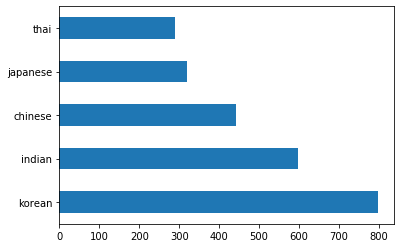
We get limited number of cuisines, but di distribution of data no dey even. You fit fix am! Before you do am, explore small more.
-
Find how much data dey available per cuisine and print am out:
thai_df = df[(df.cuisine == "thai")]
japanese_df = df[(df.cuisine == "japanese")]
chinese_df = df[(df.cuisine == "chinese")]
indian_df = df[(df.cuisine == "indian")]
korean_df = df[(df.cuisine == "korean")]

print(f'thai df: {thai_df.shape}')
print(f'japanese df: {japanese_df.shape}')
print(f'chinese df: {chinese_df.shape}')
print(f'indian df: {indian_df.shape}')
print(f'korean df: {korean_df.shape}')
Di output go look like dis:
thai df: (289, 385)
japanese df: (320, 385)
chinese df: (442, 385)
indian df: (598, 385)
korean df: (799, 385)
Discovering ingredients
Now you fit dig deeper into di data and learn wetin be di common ingredients for each cuisine. You go need clean out di data wey dey repeat and dey cause confusion between cuisines, so make we learn about dis problem.
-
Create one function
create_ingredient()for Python to create one ingredient dataframe. Dis function go start by dropping one column wey no dey helpful and sort di ingredients by their count:def create_ingredient_df(df): ingredient_df = df.T.drop(['cuisine','Unnamed: 0']).sum(axis=1).to_frame('value') ingredient_df = ingredient_df[(ingredient_df.T != 0).any()] ingredient_df = ingredient_df.sort_values(by='value', ascending=False, inplace=False) return ingredient_dfNow you fit use dis function to get idea of di top ten most popular ingredients by cuisine.
-
Call
create_ingredient()and plot am by callingbarh():thai_ingredient_df = create_ingredient_df(thai_df) thai_ingredient_df.head(10).plot.barh()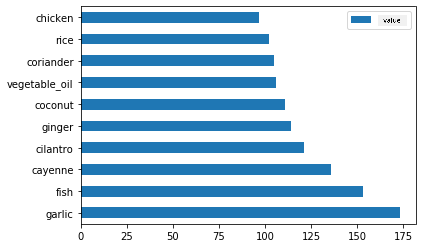
-
Do di same for di Japanese data:
japanese_ingredient_df = create_ingredient_df(japanese_df)
japanese_ingredient_df.head(10).plot.barh()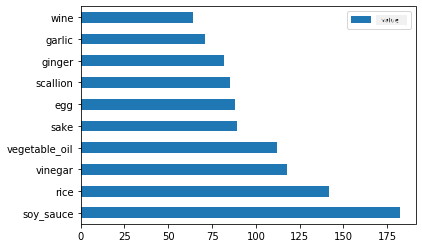
-
Now for di Chinese ingredients:
chinese_ingredient_df = create_ingredient_df(chinese_df)
chinese_ingredient_df.head(10).plot.barh()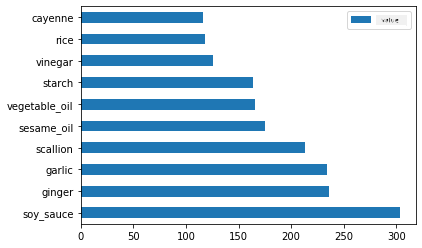
-
Plot di Indian ingredients:
indian_ingredient_df = create_ingredient_df(indian_df)
indian_ingredient_df.head(10).plot.barh()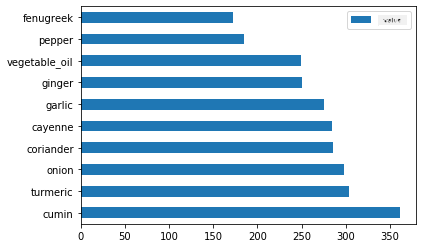
-
Finally, plot di Korean ingredients:
korean_ingredient_df = create_ingredient_df(korean_df)
korean_ingredient_df.head(10).plot.barh()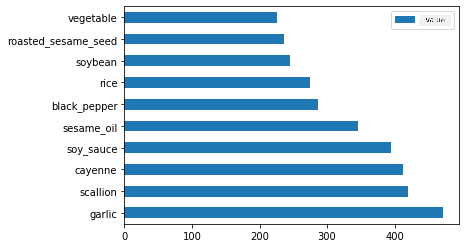
-
Now, drop di common ingredients wey dey cause confusion between different cuisines, by calling
drop():Everybody like rice, garlic, and ginger!
feature_df= df.drop(['cuisine','Unnamed: 0','rice','garlic','ginger'], axis=1)
labels_df = df.cuisine #.unique()
feature_df.head()
Balance di dataset
Now wey you don clean di data, use SMOTE - "Synthetic Minority Over-sampling Technique" - to balance am.
-
Call
fit_resample(), dis strategy dey generate new samples by interpolation.oversample = SMOTE() transformed_feature_df, transformed_label_df = oversample.fit_resample(feature_df, labels_df)By balancing your data, you go get better results when you dey classify am. Think about binary classification. If most of your data dey one class, machine learning model go dey predict dat class more often, just because e get more data for am. Balancing di data go help remove dis imbalance.
-
Now you fit check di numbers of labels per ingredient:
print(f'new label count: {transformed_label_df.value_counts()}')
print(f'old label count: {df.cuisine.value_counts()}')
Your output go look like dis:
new label count: korean      799
chinese     799
indian      799
japanese    799
thai        799
Name: cuisine, dtype: int64
old label count: korean      799
indian      598
chinese     442
japanese    320
thai        289
Name: cuisine, dtype: int64
Di data dey clean, balanced, and very sweet!
-
Di last step na to save your balanced data, including labels and features, into one new dataframe wey you fit export into one file:
transformed_df = pd.concat([transformed_label_df,transformed_feature_df],axis=1, join='outer') -
You fit look di data one more time using
transformed_df.head()andtransformed_df.info(). Save one copy of dis data for future lessons:transformed_df.head() transformed_df.info() transformed_df.to_csv("../data/cleaned_cuisines.csv")Dis fresh CSV dey now for di root data folder.
🚀Challenge
Dis curriculum get plenty interesting datasets. Check di data folders and see whether any dey wey fit work for binary or multi-class classification? Wetin be di questions wey you go ask for dis dataset?
Post-lecture quiz
Review & Self Study
Explore SMOTE's API. Wetin be di use cases wey e dey best for? Wetin be di problems wey e dey solve?
Assignment
Explore classification methods
Disclaimer:
Dis dokyument don use AI transleshion service Co-op Translator do di transleshion. Even as we dey try make am accurate, abeg make you sabi say automatik transleshion fit get mistake or no correct well. Di original dokyument wey dey for im native language na di one wey you go take as di main source. For important informashon, e good make you use professional human transleshion. We no go fit take blame for any misunderstanding or wrong meaning wey fit happen because you use dis transleshion.